

Mould Cleaning and Removal Services in Ras Al Khaimah
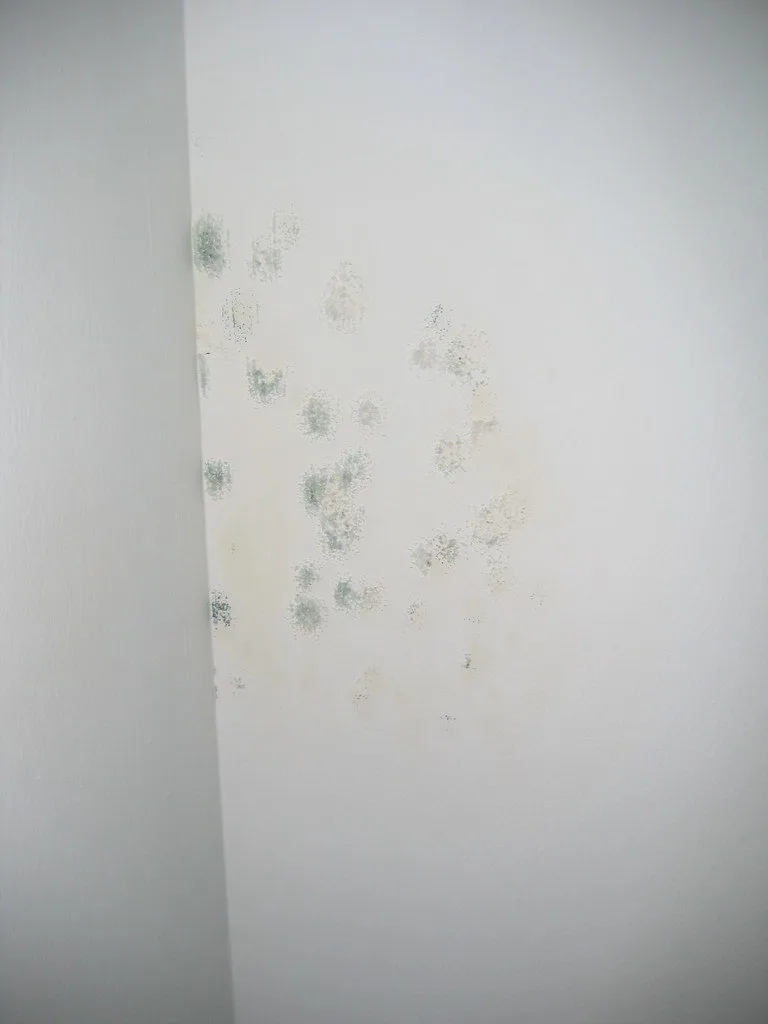
Mould in a Ras Al Khaimah home rarely starts where you can see it. It begins as a grey shadow in a bathroom ceiling corner, a speckle along the silicone, a musty smell inside a wardrobe on an external wall, a black bloom around an AC grille, and by the time it is obvious it has usually been growing for weeks on moisture that is still there. Halo Clean’s mould cleaning and removal service in Ras Al Khaimah deals with both halves of that problem. We inspect the affected area, take a moisture reading and find out where the damp is coming from, remove the growth from ceilings, walls, bathrooms, wardrobes, window frames and the surfaces around AC units, disinfect and dry the area, and give you a written record of what we found and what will stop it coming back.
We are a licensed Ras Al Khaimah company with an office on Al Qawasim Corniche, so the inspector who looks at your ceiling is local rather than driving up from Dubai for the day, and the quote is written after the inspection rather than guessed per square metre over the phone. If the growth is inside the ductwork or the indoor unit itself, that is our AC duct cleaning service; if it is a small patch on a hard surface, our guide to removing mould at home may be all you need.
Get a Mould Inspection and Written Quote
Call or WhatsApp 054 175 4256, or send us a photo of the mould and we will arrange an inspection and come back with a written quote.
Why Ras Al Khaimah Chooses Halo Clean for Mould Removal
Most of the companies that rank for mould removal in Ras Al Khaimah are Dubai firms with a RAK landing page. They quote by the square metre from a photo, send a crew up the E311 for the day and treat the stain they can see. Mould is a moisture problem before it is a cleaning problem, and a stain treated without its source is back within the season. Our approach is the one the public health guidance actually describes: find the moisture, remove the growth, disinfect and dry the surface, and tell you plainly what has to change, whether that is a blocked AC condensate line, a bathroom extractor nobody switches on, a wardrobe pressed against an external wall or a room cooled so hard that the walls sweat. We are local, we are licensed, and we do not sell you a repair we cannot do.
- An inspection first, with a moisture reading at the affected area and the damp source identified before anything is quoted
- The growth removed, not painted over: loose growth vacuumed with a HEPA-filtered machine, surfaces cleaned and disinfected, grout and silicone steam cleaned
- A written record with before and after photos, the moisture readings and the prevention steps, useful for a landlord, a tenant or an insurer
- Honest scope: we say which materials can be cleaned and which have to be replaced, and we point you to a plumber or AC technician when the source needs one
- A Ras Al Khaimah company with an office on Al Qawasim Corniche, not a Dubai crew on a day trip
- Professional cleaning and disinfection products with safety data sheets available on request, and a closed-off, dust-sheeted work area
- One team for the whole chain: mould removal, AC duct cleaning, bathroom steam cleaning and deep cleaning
- Licensed and insured, trade licence 64309, open 8am to 8pm, seven days a week
We remove mould from apartments, villas and commercial premises across Ras Al Khaimah: the towers and sea-facing villas of Al Marjan Island, Al Hamra and Mina Al Arab, where coastal humidity does the most damage, the apartments of Al Nakheel and the Corniche, and the family villas of Al Dhait, Khuzam and Al Riffa. See all the areas we serve.
What Our Mould Cleaning and Removal Service Covers
The service runs in the order that makes the mould stay gone: inspection, source, removal, disinfection, drying, record. Every job starts with a visit. We look at the growth and at everything around it, take a moisture reading at the affected area and trace the damp to its cause, then write the quote around what we found. On the day, the room is closed off and sheeted, the growth is removed and the surfaces are cleaned, disinfected and dried, and you receive a written record with photographs, the readings and the steps that keep the area dry. The words vary, mould removal, mould cleaning, mould treatment or, in American English, mold remediation, but this is the service all of them describe.
Where we remove mould
- Ceilings and walls: black, green or grey growth and damp staining on paint, plaster and gypsum board, including the high corners where condensation collects
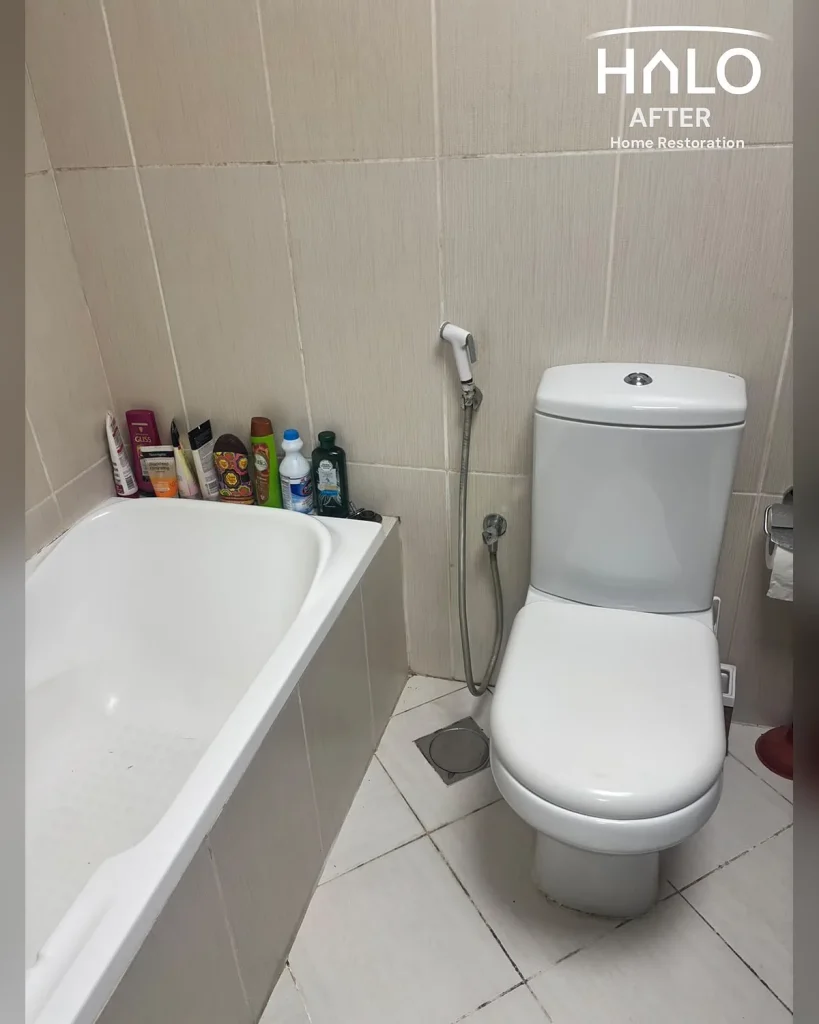
- Bathrooms: ceilings above the shower, grout lines, silicone around trays and basins, the back of the door and the extractor grille
- Around air conditioning: the wall and ceiling around split units and ceiling grilles, drip trays and the strip beneath a leaking unit, with the ductwork itself handled by our duct cleaning service
- Wardrobes and built-in cupboards: the back panel, the external wall behind it, shelves and the clothes and shoes that have picked up the smell
- Windows and doors: frames, sills, seals and the curtains and blinds that hang in the condensation
- Kitchens and laundry rooms: under the sink, behind the fridge and washing machine, inside base cupboards on an external wall
- Soft furnishings: sofas, mattresses, curtains and rugs with mildew spots, steam cleaned and extracted rather than wiped
- Homes reopened after summer: villas and holiday homes left closed with the AC off, treated room by room before the furniture goes back
- After a leak: the wall, floor and cupboards affected by a burst pipe, a failed water heater or an overflowing AC drain, once the leak itself is repaired
- Commercial premises: gym changing rooms and showers, hotel rooms and back of house, restaurant stores and cold-room surrounds, offices, warehouses and staff accommodation
How a mould removal job runs
- You send us photos or call, and we book an inspection at a time that suits you; for a small visible patch we can often quote from the inspection on the same visit
- The inspector examines the growth and the room, takes a moisture reading at the affected area and looks for the source: the AC condensate line, a leak, condensation on a cold surface, poor extraction or a closed-up room
- You receive a written quote for the removal, with a plain list of anything that has to be repaired or replaced by someone else first, such as a leaking pipe or a failed AC drain
- On the day the room is closed off, floors and furniture are sheeted, loose growth is removed with a HEPA-filtered vacuum, and the surfaces are cleaned and disinfected; grout, silicone and tiled areas are steam cleaned
- The area is dried and ventilated, porous materials that cannot be saved are listed for replacement, and painting is left until the surface is properly dry
- You receive the written record with before and after photos, the readings and the prevention steps, and we can book a re-check visit if you want the area looked at again later in the season
The scope is deliberately honest. We remove growth from surfaces and from the materials that can be cleaned; we do not replace gypsum board, re-plaster walls, repair leaks or service AC units, and we will tell you when one of those is needed before any cleaning is quoted. Growth inside ducts, coils and blowers belongs to our AC duct cleaning and disinfection service, which is often booked alongside. We do not carry out laboratory air sampling: where mould is visible, the public health guidance is that sampling adds nothing to the decision to remove it, and the quote is based on what the inspection finds.
Watch: Mould Removal in a Ras Al Khaimah Home
Watch how our team removes mould from a Ras Al Khaimah home: the inspection and the moisture reading, the growth removed and the surface disinfected, and the moisture source traced so it does not come back.
When to Call a Mould Removal Company in Ras Al Khaimah
A patch smaller than about a square metre on a hard, non-porous surface, a tile or a painted wall with no staining behind it, can usually be cleaned at home with gloves, a mask and an open window; our guide to removing mould at home walks through it. Call us when the growth is larger than that, when it has soaked into plaster, gypsum board or fabric, when it keeps coming back after cleaning, or when someone in the home has asthma, allergies or a weakened immune system and should not be doing the cleaning at all.
- Black or green growth across a ceiling, a wall or the back of a wardrobe, or a patch that is bigger than a square metre
- A musty smell you cannot trace, especially in a closed room, a wardrobe or a bathroom with no window
- Mould that returns within weeks of being wiped off, which means the moisture is still there
- Staining, bubbling paint or soft plaster around an AC unit, a ceiling grille or a water heater
- A villa or holiday home reopened after the summer with growth in several rooms
- A leak or an overflowing AC drain that has soaked a wall, a floor or a cupboard
- A tenant or landlord dispute where the cause and extent of the damp need to be documented
- A child, an older person or anyone with asthma, allergies or a weakened immune system in the home
- A rental handover, a sale or a new tenancy where the property has to be clean and dry on a stated date
How Mould Removal Is Priced in Ras Al Khaimah
Mould removal in Ras Al Khaimah is usually quoted per square metre, from a photo, before anyone has looked at the wall. We do not price it that way, because the square metre you can see is rarely the whole job. The quote is written after the inspection and depends on the size of the affected area, the surfaces involved, how many rooms are affected, whether soft furnishings need steam cleaning, whether anything has to be replaced rather than cleaned, and how much drying the room needs. You see the whole figure in writing before we book the work, there is nothing added on the day, and the quote says clearly what is included and what is somebody else’s repair. For a single bathroom ceiling or one wardrobe wall it is a small job; for a villa reopened after the summer it is planned room by room.
- Homeowners and tenants with mould in a bathroom, a bedroom, a wardrobe or around an AC unit
- Landlords and property managers who need the cause documented and the unit clean before a new tenancy
- Holiday-home operators and overseas owners reopening a villa or apartment after the summer
- Hotels, gyms, restaurants, offices and warehouses with growth in changing rooms, stores or staff areas
- Buyers taking handover of a new home where damp has shown up during the defects period
Ready to get it looked at? Call or WhatsApp 054 175 4256, or send us a few photos of the mould with the room and the property type, and we will arrange the inspection and the written quote.
Mould in Ras Al Khaimah Homes: Why It Grows, What It Does and How It Is Removed Properly
Ras Al Khaimah is a coastal emirate, and from late spring to early autumn the air carries a great deal of water. Indoors, air conditioning keeps the rooms cool, and wherever that cool reaches a surface, the warm, humid air touching it condenses: the back of a wardrobe against an external wall, the ceiling corner above a shower, the metal grille of an AC unit, the glass and frame of a window, the wall beneath a drip tray that no longer drains. Mould needs only moisture, something organic to feed on and time. Paint, plaster, gypsum board, grout, silicone, dust, fabric and wood all qualify as food, so in a RAK summer the only ingredient that is ever in short supply is dryness.
The sources we find most often are mundane. A split unit whose condensate line is blocked, so the water runs down the wall instead of out of the building. A bathroom extractor that is never switched on, or vents into the ceiling void. A room cooled to eighteen degrees with the door shut, so the walls stay below the dew point of the air coming in from the corridor. A villa left closed for two months with the AC off, which turns the whole house into a still, warm, damp box. A slow leak behind a vanity or a water heater. Furniture pushed hard against an external wall, so the air behind it never moves. None of these is fixed by wiping the stain, which is why the stain comes back.
The health picture is well documented without being dramatic. The World Health Organization’s guidelines on indoor dampness and mould conclude that living in a damp or mouldy building raises the likelihood of respiratory symptoms, allergies and asthma, and that the single most important protection is to prevent or remove persistent dampness and microbial growth on indoor surfaces. There is no safe-exposure number, because none has been established, and the colour of the growth, black, green, grey or white, tells you little about the species or the risk. The people most affected are those with asthma or allergies, young children, older people and anyone whose immune system is compromised, which is a good reason for those households not to do the cleaning themselves.
Most home remedies fail for the same reasons. Bleach and other biocides are not recommended as a routine part of mould clean-up by the US Environmental Protection Agency, because killing the growth is not the same as removing it and the water problem is untouched. Paint and sealant applied over mould trap it and peel. Scrubbing a porous surface drives the growth deeper and releases spores into the room. And the guidance on size is clear: a patch under about a square metre on a hard surface is a household job; anything larger, anything in a porous material, anything that recurs, and anything near someone with a respiratory condition is a job for a company with the equipment to contain it.
Proper removal is a sequence rather than a product. The room is closed off and the floor and furniture are sheeted, so spores disturbed during the work do not spread through the house. Loose growth is lifted with a HEPA-filtered vacuum rather than brushed off. Hard surfaces are cleaned with a professional cleaner-disinfectant and wiped with colour-coded microfibre that leaves the job with the waste; grout, silicone and tiled areas are steam cleaned, which reaches the pores a cloth cannot. Materials that cannot be cleaned, a saturated ceiling tile, a section of gypsum board that has gone soft, silicone that has blackened right through, are listed for replacement rather than disguised. The area is dried and ventilated, a second moisture reading confirms it, and nothing is painted until it is dry. The record you receive names the source, because the person who fixes that, a plumber, an AC technician, or you with a dehumidifier and an open door, is the one who actually ends the problem.
A note on words. Mould removal, mould cleaning, mould treatment and mould remediation are used interchangeably in the UAE, and American English spells it mold, so a search for mold remediation in Ras Al Khaimah lands on the same service. Mildew is the everyday name for the light surface growth you see first on grout and fabric, and the same thing is being removed. If you rent, your tenancy contract allocates maintenance; a leaking pipe or a failed AC unit is normally the landlord’s repair, while condensation from how a room is used is usually treated as the occupant’s, so a written inspection record that names the source is worth having for both sides before anyone pays for anything.
What You Get With Halo Clean
A Local Team, Not a Day Trip
Licensed Ras Al Khaimah company with an office on Al Qawasim Corniche. The inspector who quotes the job is the one who knows the buildings and the climate here.
Inspection With a Moisture Reading
We look at the growth and the room, measure the moisture at the affected area and trace the damp to its cause before anything is quoted.
Removed, Disinfected and Dried
Loose growth vacuumed with a HEPA-filtered machine, surfaces cleaned and disinfected, grout and silicone steam cleaned, the room dried and ventilated.
A Written Record With Photos
Before and after photographs, the moisture readings, what was cleaned, what has to be replaced and what will keep the area dry, in one document you can forward.
The Source Named Plainly
A blocked condensate line, a leak, a cold wall or a closed-up room: the record says which, so the right person fixes it and the mould does not return.
One Team for the Whole Problem
AC duct cleaning for the ductwork, bathroom steam cleaning for the grout, deep cleaning for the rest of the home, and a re-check visit when you want one.
Mould rarely travels alone. When the growth has reached the ductwork or the indoor unit, our AC duct cleaning and disinfection clears the system that is spreading it; our bathroom and tile steam cleaning keeps grout and silicone clear once the ceiling has been treated; a deep clean resets a villa reopened after the summer; sofa and upholstery cleaning and mattress cleaning deal with mildew in soft furnishings; and holiday home management keeps an empty property aired, cooled and checked so the problem never starts.
How to Arrange Mould Removal in Ras Al Khaimah
It starts with a photo. Send us a picture of the growth, tell us the room and the property type and whether there is a known leak or an AC unit nearby, and we will book the inspection. The quote follows the inspection in writing, and the work is booked for a time that suits you, including weekends.
- Send photos of the mould by WhatsApp or through the contact form, with the room, the property type and anything you already know about leaks or the AC
- We book an inspection; the inspector takes a moisture reading, traces the source and confirms what can be cleaned and what has to be replaced
- You receive a written quote with the scope, the exclusions and the preparation needed, such as emptying a wardrobe
- The removal is booked at a time that suits you; the room is closed off, treated, disinfected and dried
- You receive the written record with photos and readings, and can book a re-check visit later in the season
Call or WhatsApp 054 175 4256 between 8am and 8pm, any day of the week, or send us your photos and we will come back to you about the inspection.
Request a Mould Inspection in Ras Al Khaimah
Mould on a ceiling, a wall, in a bathroom or a wardrobe, or around an AC unit anywhere in Ras Al Khaimah? Send us a photo and we will arrange an inspection and a written quote. Call or WhatsApp 054 175 4256, or send your details and we will reply the same working day.
Mould Removal in Ras Al Khaimah: Common Questions
Is black mould dangerous?
Living with persistent damp and mould is linked to respiratory symptoms, allergies and asthma, and the World Health Organization’s guidance is clear that the protection is to remove the dampness and the growth rather than to identify the species. The colour tells you very little: black, green, grey and white growth are all treated the same way, and no safe-exposure level has been set for any of them. The people most affected are those with asthma or allergies, young children, older people and anyone with a weakened immune system. If someone in your home is in one of those groups, do not clean a large patch yourself; have it inspected and removed with the room closed off.
Why does the mould keep coming back after I clean it?
Because the moisture is still there. Mould needs water, food and time, and every painted wall, grout line and wardrobe back panel in Ras Al Khaimah already supplies the food. Wiping the stain removes the visible growth and leaves the condensation, the blocked AC drain, the leak or the closed-up room that caused it, so the patch returns within weeks. Our inspection takes a moisture reading and names the source in writing; once that is dealt with, the removal lasts.
Can I remove mould myself?
Often, if it is small. A patch under about a square metre on a hard, non-porous surface, a tile, a painted wall with sound plaster behind it, can be cleaned at home with gloves, a mask, an open window and a methodical wipe rather than a scrub; our guide to removing mould at home explains how and what to avoid. Call us when the patch is larger, when the growth is in plaster, gypsum board, fabric or a wardrobe back, when it recurs, or when someone in the home has a respiratory condition.
How much does mould removal cost in Ras Al Khaimah?
We quote in writing after an inspection, not per square metre from a photo, because the area you can see is rarely the whole job. The figure depends on the size of the affected area, the surfaces involved, how many rooms are affected, whether soft furnishings need steam cleaning, whether anything has to be replaced rather than cleaned, and the drying the room needs. The quote shows the whole figure, says what is included and names any repair that belongs to a plumber or AC technician, and nothing is added on the day.
Do you do mould inspections and air quality testing?
Every job starts with an inspection: we examine the growth and the room, take a moisture reading at the affected area and trace the source, and you receive the findings in writing. We do not carry out laboratory air or surface sampling. Where mould is visible, the public health guidance is that sampling does not change the decision, which is to remove the growth and fix the moisture, so we put the effort into those two things instead.
What causes mould in Ras Al Khaimah homes?
Humid coastal air meeting cold, air-conditioned surfaces. Condensation forms wherever the two touch: ceiling corners above showers, the wall behind a wardrobe on an external wall, AC grilles and the wall beneath a leaking drip tray, window frames and sills. Add a blocked condensate line, an extractor nobody runs, a room cooled hard with the door shut, a slow leak or a villa left closed with the AC off for the summer, and growth follows within weeks.
There is mould around my AC vents. Is that duct cleaning or mould removal?
Both, usually. Growth on the ceiling and wall around a grille or a split unit, and the staining beneath a drip tray, is surface work and belongs to this service. Growth inside the ducts, on the coil or in the blower is our AC duct cleaning and disinfection service, and a musty smell that arrives with the cold air is the usual sign of it. We book the two together when the inspection shows both, and we will tell you if the unit’s drain or drip tray needs an AC technician first.
Can you remove mould from a wardrobe and from clothes?
Yes. A wardrobe on an external wall is one of the most common sites in Ras Al Khaimah, because the air behind it never moves. We treat the back panel, shelves and the wall behind, dry the void, and advise on spacing the unit off the wall and leaving the doors ajar in summer. Clothes and shoes with the smell or light spotting can go through our laundry collection service, and heavily affected soft items are listed for you to decide on.
What about mould on the bathroom ceiling, in the grout or on the silicone?
The ceiling above the shower is cleaned, disinfected and dried, and we check that the extractor actually works and is used. Grout and silicone are steam cleaned, which reaches into the pores; silicone that has blackened all the way through cannot be cleaned and is listed for replacement. Our bathroom and tile steam cleaning is the regular service that keeps the room clear afterwards.
We had a leak. Can you deal with the mould it left?
Once the leak itself is repaired, yes. We inspect the wall, floor and cupboards it reached, take moisture readings to see how far the water travelled, remove the growth from what can be cleaned, dry the area and list anything that has gone soft or is saturated for replacement. The written record with the readings and photos is the document a landlord, a tenant or an insurer will ask for.
Do we have to leave the home while you work?
Not usually. The affected room is closed off and sheeted, and we ask that children, pets and anyone with asthma or allergies stay out of it until the surfaces are dry and the room has been ventilated. For a villa with growth in several rooms we plan the sequence with you at the inspection so the family can stay in the house.
What products do you use, and do you use bleach?
We use professional cleaning and disinfection products from our commercial range, applied by trained staff, with safety data sheets available on request, together with HEPA-filtered vacuuming and steam. We do not use household bleach as a routine treatment: the US Environmental Protection Agency does not recommend it for mould clean-up, and the point of the work is to remove the growth and the moisture, not merely to whiten the stain.
How long does mould removal take?
It depends on the area, the surfaces and the drying, and the inspection confirms it before you book. A single bathroom ceiling or one wardrobe wall is usually dealt with in a visit; a villa reopened after the summer, or a wall that has been wet for weeks, is planned room by room and may need a second visit once the area has dried. We do not quote a time until we have seen the room.
Will the stain come off completely, and can I paint afterwards?
On hard, non-porous surfaces, yes. On paint, plaster and gypsum board a shadow can remain where the growth has stained the material, even though the growth itself has been removed, and the honest answer is that the surface is then repainted. Paint only when the surface is properly dry, which the second moisture reading confirms; painting over damp or live growth traps it and the paint peels. Materials that are saturated or soft are replaced, not painted.
We left our villa closed for the summer and came back to mould everywhere. What now?
It is the most common autumn call we get. Do not start wiping: open the house up, run the AC and send us photos. We inspect room by room, treat the ceilings, walls, wardrobes and bathrooms in sequence, steam clean the soft furnishings that can be saved, and leave you a record of what was done. Our guide to leaving a RAK home empty explains how to avoid it next year, and our holiday home management service keeps a property aired and checked while you are away.
Do you remove mould from gyms, hotels, restaurants and offices?
Yes. Changing rooms and showers, hotel bathrooms and back-of-house stores, restaurant dry stores and the surrounds of cold rooms, office ceilings under leaking AC, warehouse walls and staff accommodation. Commercial work is inspected and quoted the same way, scheduled around your hours, and the written record is prepared for the person who holds the premises file.
Is mould remediation the same as mould removal?
For a home or a commercial unit in Ras Al Khaimah, yes. Mould remediation, mould removal, mould cleaning and mould treatment describe the same sequence of inspection, source, removal, disinfection and drying, and American English spells it mold, so a search for mold remediation in Ras Al Khaimah is looking for this service. Mildew is the everyday word for the first light surface growth, and the same thing is being removed.
Who pays, the landlord or the tenant?
Your tenancy contract decides, and the cause usually settles it. A leaking pipe, a failed water heater or an AC unit whose drain has stopped working is normally the landlord’s repair, while condensation from how a room is used, drying laundry indoors or keeping a wardrobe hard against a cold wall, is usually treated as the occupant’s. That is why our inspection record names the source and includes the readings and photos: it gives both sides a document to work from before anyone pays.
Ready to Get Rid of the Mould for Good?
Mould on a ceiling, a wall, in a bathroom or a wardrobe, or around an AC unit anywhere in Ras Al Khaimah: send us a photo, and we will inspect it, find the source and quote the removal in writing. Call or WhatsApp 054 175 4256, or request a quote and we will reply the same working day.
Licensed and insured Ras Al Khaimah company, trade licence 64309.